“Digital twins are used today in many fields: engines, bridges, climate systems, and even human health. They let us look into what we cannot touch, measure what we cannot see, and predict that which has not yet happened. They are the visible edge of a long-hidden system.”
What is a digital twin, really?
In technical terms, a digital twin is a data-driven model, a dynamic simulation of a real object or system. Take a jet engine as an example. A digital twin does not merely recreate its shape; it receives continuous data streams from the physical engine in real time. This data is fed into algorithms that continuously update the model, enabling engineers to predict wear, optimise performance, and prevent failures before they occur.
As John Fitzgerald and his co-authors explain in The Engineering of Digital Twins:
“A digital twin is a live model continuously informed by data.” — The Engineering of Digital Twins
In short, it is a mirror with a real-time memory function. Not the static copy we may be more familiar with, but a living parallel, a simulation that evolves alongside the original, follows it, and even predicts its future.
Digital twins are used today in many fields: engines, bridges, climate systems, and even human health. They let us look into what we cannot touch, measure what we cannot see, and predict that which has not yet happened. They are the visible edge of a long-hidden system.
But this modern technology is only the latest expression of an ancient human instinct — an instinct to make the invisible visible. We have done it with prophecies. With sacred texts. With rituals. We have done it with mirrors, paintings, poems, and prayers. And now, with code.
So, what is it, really, that we are trying to mirror?
In the Beginning – The Earliest Reflections
Long before sensors and simulations existed, humanity was already engaged in modelling and mapping unseen realities. The very first pages of the Hebrew Bible do not begin within the domains of abstract philosophy, they begin with an act of reflection:
“So God created humankind in his image, in the image of God he created them.” — Genesis 1:27
This is not a digital twin, but it is a metaphysical one. In this ancient worldview, humanity is not formed as a machine or an object, but as a kind of mirror made of clay. A visible model of divine essence, capable of choice, responsibility, and relationship.
As John J. Collins writes in An Introduction to the Hebrew Bible, this concept “shapes the entire Hebrew Bible’s understanding of human dignity and responsibility.” In other words: to be created “in the image” is not cosmetic, it is ethical. We are constructed to reflect something greater than ourselves, and to do so in our lives, not only in our language.
This logic of visibility and representation runs throughout the biblical tradition. The prophets were entrusted exclusively with sacred messages from the divine. These were visions, judgments, and promises, all intended to reveal what otherwise could not be seen. The prophet was a kind of spiritual interface, a living model of what heaven required of earth. “Prophets are intermediaries between God and people,” writes Collins. “They receive divine messages, often in visions, and are tasked with communicating these to the public.”
These prophets were not merely static oracles. They were dynamic models of God’s will, perhaps not with algorithms, but certainly with conviction, voice, and risk. Later, apocalyptic literature, such as the Book of Daniel, added yet another layer to this early theology of representation. Daniel’s dreams draw back the curtain and reveal a hidden layer of reality, a cosmic twin world running parallel to our own, just beyond reach yet influencing everything. “In Daniel’s apocalyptic visions,” Collins explains, “the veil is lifted to show the heavenly realm behind earthly events.”
Here the human impulse to map the invisible becomes almost complete: time, morality, history, and destiny are all rendered in symbolic visions. It is theology as system design.
Today, we create digital twins to model engines and cities. In the ancient world, we shaped ethical, narrative, and prophetic twins, tools for living in alignment with something greater and unseen. The goal then was not necessarily prediction, but participation. Before computers, we simulated the divine.
Incarnation as Interface – When the Model Becomes Flesh
If the Hebrew prophets modelled the divine will through speech and visions, the early Christians took the concept even further. According to their view, the divine did not merely speak, it took form in flesh.
The Gospel of John opens with a metaphysical claim:
“In the beginning was the Word, and the Word was with God, and the Word was God… and the Word became flesh and dwelled among us.” — John 1:1,14
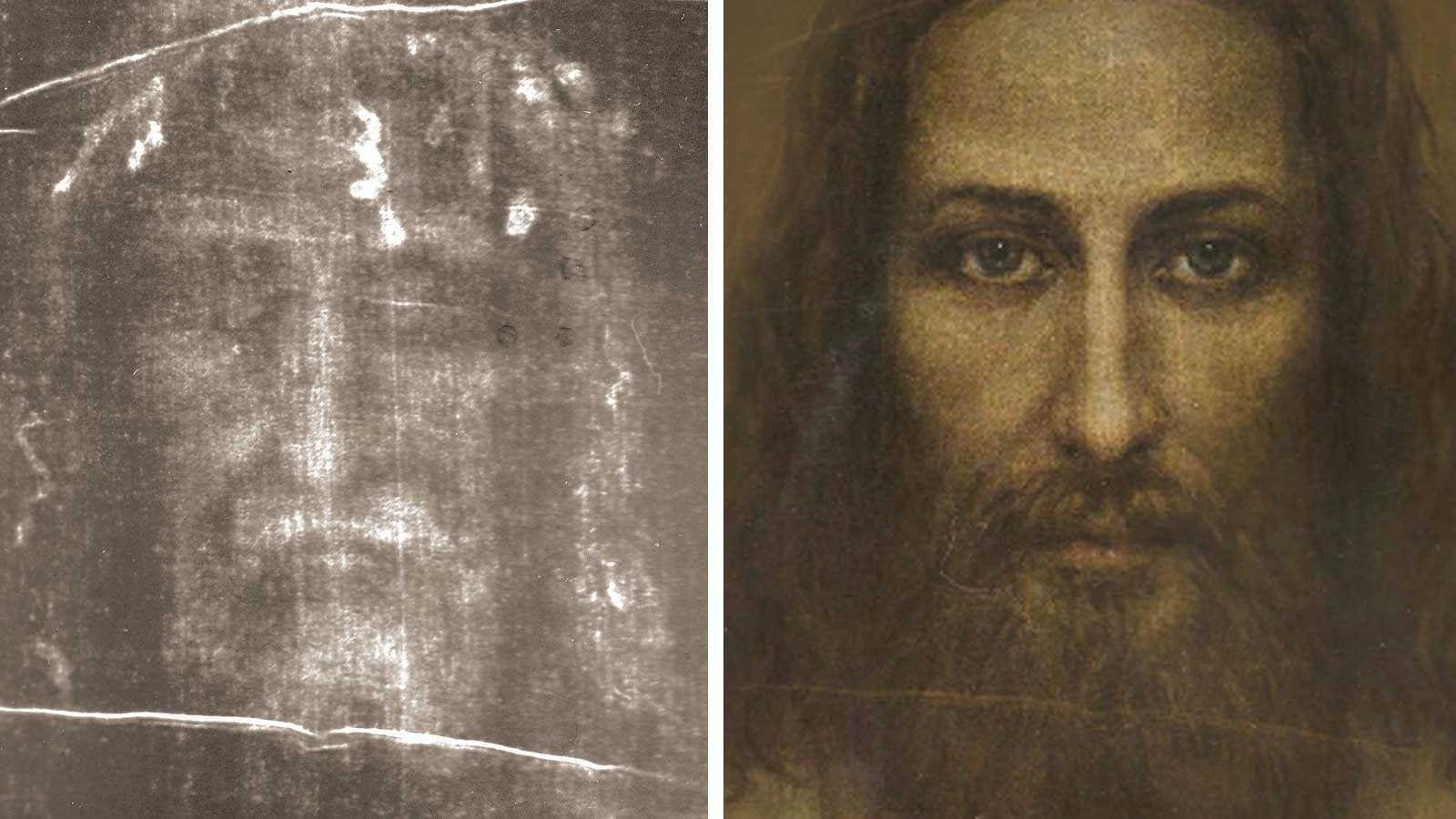
This is not merely theological poetry, it is a radical act of modelling. John presents Jesus as a twin of the divine, not only in metaphor, but in matter. A living, embodied interface between heaven and earth. To see him, to follow him, is to witness the invisible made visible.
Bart Ehrman notes in A Brief Introduction to the New Testament how each Gospel functions as a kind of model, not merely an account of events, but a curated simulation of meaning. The Gospel writers are not neutral historians; they are engineers of memory, shaping the narrative to reflect theological truths. John’s Jesus is not the same as Mark’s or Luke’s. Each version is a constructed twin of the same original, informed by data (oral traditions), refined through perspective, and built for a purpose.
“The Gospel of John,” writes Ehrman, “portrays Jesus as a divine being come to earth for the salvation of all who believe in him.”
Even beyond the canonical texts, early Christian literature embraced this logic of twinship. In The Acts of Paul and Thecla, an apocryphal account from the second century, Paul’s teaching is rendered not in yet another letter, but in the life of a woman. Thecla becomes a living copy of Paul’s ethic, refusing marriage, surviving persecution, and embodying his radical vision in real time. She is not merely a disciple; she is a mirror.
Elsewhere, martyr narratives make this literal. In The Martyrdom of Polycarp, the bishop’s death is portrayed as a kind of sacrificial interface: his body becomes a visible expression of his inner faith. His burning flesh is described as glowing “like gold or silver refined in a furnace.”
This is not suffering for suffering’s sake, it is a visible manifestation of conviction.
Even anonymous writings such as Letter to Diognetus continue the thread:
“What the soul is in the body, that Christians are in the world.” — Letter to Diognetus
These are not digital twins. But they are spiritual twins, attempts to render, represent, and extend invisible truth into visible, embodied action. In other words: the early Christian tradition did not only ask, “What is true?” It asked, “How can that truth be made visible, in words, in bodies, in lives?”
Long before software, there was Scripture. Long before sensors, there were saints. And long before the mirror was made of glass, it was made of flesh and blood.
The Art of Omission – Jazz, Reggae, and the Negative Space
Not all visibility is revelation. Sometimes the most powerful element in a system, or a soul, is what is not said, what is not modelled, what remains hidden. We often think of digital twins as instruments of total visibility, mirrors optimised for precision and control. But in art, music, and even psychotherapy, it is often the spaces in between, the pauses, the refusals that carry meaning.
In jazz, it is the silence between the notes that gives the solo its depth. In reggae, the rhythm does not live in the downbeat, but in the off-beat, the space between the pulse. These forms build tension through restraint. They model absence as structure and make the invisible audible.
In visual art, negative space defines form. The contour of a figure is shaped as much by what surrounds it as by what fills it. A sculpture reveals its meaning through what it does not carve. We see, therefore, through subtraction.
Even psychoanalysis is a discipline of omission. The goal is not only to bring thoughts forward, but to notice what is left out, what slips away, what is not said. As Freud wrote: the unconscious does not speak in language, but in patterns, gaps, dreams. The therapeutic act is a kind of modelling, a slow, interpretive rendering of what lies beneath the surface. But it is never complete, and it was never meant to be. The human psyche, like the spiritual system or the sacred text, resists full simulation.
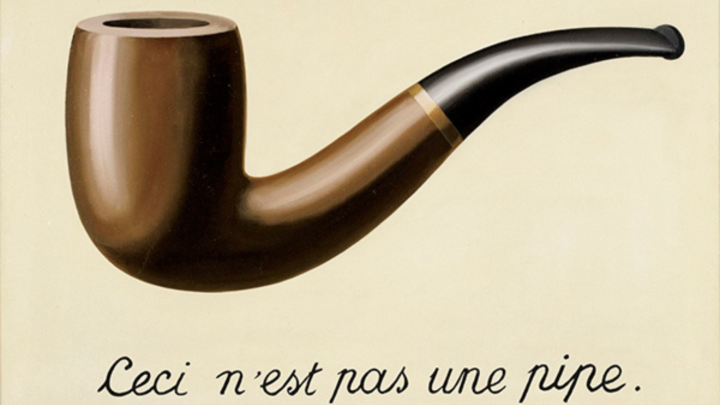
This is where the digital twin, and the broader human drive to model the hidden, meets its limit. There is a danger in assuming that everything essential can be made visible, that the map could ever become the territory. The most dangerous twin may not be the one that is inaccurate. It may be the one that claims to be complete.
We return to the ancient traditions, not because they are simpler, but because they knew better than to claim completeness. The prophets, the mystics, the artists, the early Christian martyrs, they did not reveal everything. They revealed enough. Enough to act. Enough to believe. Enough to live.
Visibility, then, is not the ultimate goal. Sometimes it is restraint, the pause, the silence, the negative space, that keeps us human.
Our Digital Doppelgängers
We no longer model only engines or weather systems. We model ourselves.
Every day, we generate data, location, heart rate, purchase history, sleep cycles, mood signals, even the tone of our voice. That data is fed into systems attempting to construct something eerily familiar: a digital version of us. A profile that can predict what we will click, anticipate what we will feel, or determine what we will see. These are our digital doppelgängers, and unlike the sacred or symbolic twins of earlier eras, these new reflections are not built for understanding, but for prediction and optimisation.
The philosopher Shoshana Zuboff has called this “behavioural surplus”, an era in which the parts of ourselves that were once private or ineffable are harvested to create models of us that we ourselves never encounter. The mirror no longer shows us ourselves. It shows others how to see us. How to use us.
There are, of course, benefits. Digital twins in healthcare can simulate a patient’s heart or lungs to test treatments without risk. In psychology, AI can mirror speech and emotional expression to support mental health diagnostics. In marketing, twins help predict desire. In security, they anticipate threats. In many ways, this is the logical extension of humanity’s desire to understand its invisible self.
But a subtle shift has occurred. These twins are not ours. They are owned, shaped, and used by others. And they are not created to reflect our inner lives, they are created to predict and manipulate our outward behaviour. In ancient theology, the twin reflected a deeper truth. In modern commerce, the twin often reflects a deeper calculation.
This raises a pressing question:
If something can mirror our voice, our gestures, our decisions, is it us? Or is it something else entirely, a flattened version, stripped of mystery, intuition, and contradiction?
Real humans are noisy. Messy. Nonlinear.
We change our minds. We act against our own best interests. We forgive. We grieve. We resist predictability.
That is what makes us human, and what makes us impossible to model.
We are left with a paradox: we continue trying to build twins of ourselves, but the more perfect they become, the less human they seem.
Dignity in the Original
Why do we constantly try to improve what already exists? Why these endless copies, the optimised versions, the seamless twins?
It is easy to say that we are pursuing insight, security, convenience, and often we are. But beneath all of this, a deeper current vibrates: a cultural discomfort with imperfection. With fragility. With uncertainty.
Theologians have wrestled with this for centuries. In the Hebrew Bible, being created in “the image of God” was not about flawlessness. It was about responsibility, about carrying something sacred, precisely within our limitations. As John Collins writes, that image is not physical or mechanical. It is moral. Relational. Mysteriously human.
Digital twins, by contrast, tempt us with fantasies of pure copies, systems without loss, reflection without noise, versions of ourselves or our machines freed from error. But what if error itself, or rather the capacity to endure it, is essential to dignity?
Even in engineering, precision is not everything. The perfect model can mislead if it forgets its purpose. As The Engineering of Digital Twins makes clear, every model has a context, and every context has limitations.
The ability to predict is not the same as wisdom. Simulation is not substitution. The early Christians understood this intuitively. They built spiritual twins, in scripture, in community, in ritual, not to replace the original, but to honour it. Their Gospels did not erase the rawness of the crucifixion or the disciples’ doubt. They preserved the contradictions. They held imperfection carefully in both hands. And in doing so, they preserved something essential: dignity in the original.
This is what is missing in many of our modern twins. Not technical precision, but humility. The awareness that what we model is not merely a system, but a life. And some lives are, by their nature, irreplaceable.
We can replace a part. Predict a behaviour. Clone a voice. But we cannot, we must not, mistake that for presence. What is dignified in us is not what can be copied. It is what resists copying altogether.
The Mirror and the Mystery
From sacred scriptures to simulation programs, we have always tried to make the invisible visible. We build gospels, mirrors, models, and machines, all in an attempt to reflect what we cannot quite grasp. It is a noble impulse. A creative one. Even a divine one. But it becomes dangerous when we forget what reflections are, and what they are not.
A digital twin can model a turbine failure before it occurs.
A story can preserve a lifelong after it has ended.
A ritual can embody a memory we did not personally experience yet still carry within us.
Each is a form of modelling. Each makes the hidden temporarily visible.
But none of them is the thing itself.
The prophets understood this. The Gospel writers accepted it. They did not attempt to capture the totality of the divine. They pointed. They suggested. They revealed just enough.
Today, we want more. More data, more precision, more control. And yet the most meaningful parts of life remain immune to prediction, grief, forgiveness, love, death.
They cannot be twinned. They must be lived.
We do not end here with a warning, but with a reminder, inspired by the words of Thomas Jefferson:
“If you want something you have never had, you may need to do something you have never done — and that begins by working with what we have, not with what we imagine we should have.”
Not every flaw needs to be corrected.
Not every system needs a twin.
Not every original needs to be improved.
Some things, the most human things, are sacred precisely because they cannot be copied.
God created humanity in God’s image, and yet none of us is perfect. Perhaps that is something for all of us to reflect on.